

Home › Thermography > Electrical Panel Thermography Inspection
Electrical Panel Thermography Inspection
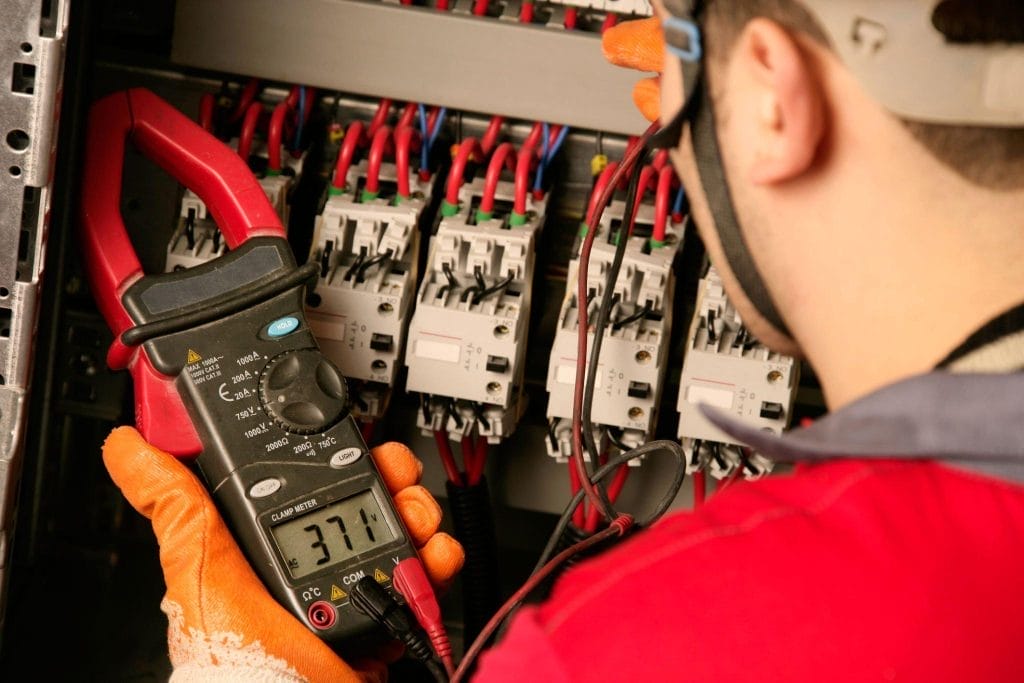
Engineer conducting infrared thermography inspection on electrical panel to detect hotspots and overheating.
Electrical panel thermography inspection identifies overheating connections, overloaded circuits, failing breakers, and abnormal temperature rise before they lead to electrical failure, fire risk, or unplanned shutdown.
Elion Technologies & Consulting Pvt. Ltd. provides electrical thermography inspection services across industrial, commercial, and infrastructure facilities using calibrated infrared thermal imaging instruments.

What is electrical panel thermography inspection?
Electrical panel thermography inspection is an infrared-based diagnostic method used to detect abnormal heat patterns in energized electrical equipment without shutdown.
Why electrical thermography is critical
- Detect hotspots before failure
- Reduce fire risk through Electrical Safety Audit
- Prevent unexpected shutdowns
- Support predictive maintenance

What we inspect
Electrical panel cable terminations inspected during thermography audit
- LT panels, MCC, PCC
- Busbars and joints
- Transformer connections
- Systems under Power Quality Analysis
Inspection is performed without shutdown, allowing real-time detection of operational issues in live electrical systems.
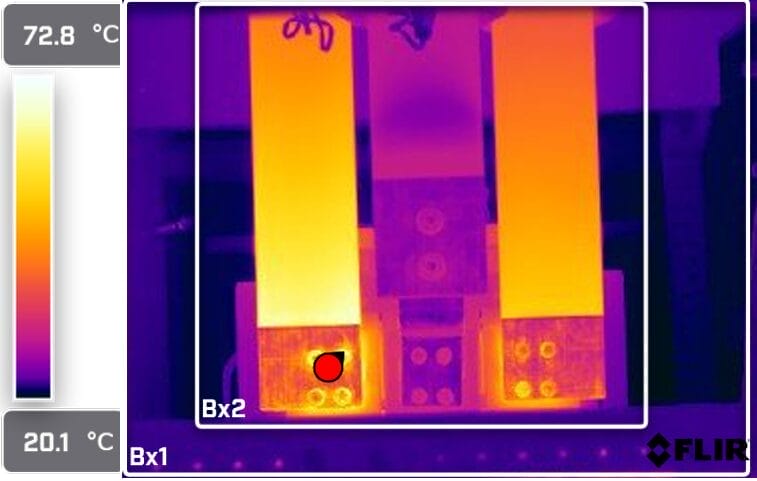
Common defects detected
Thermal image showing localized overheating in electrical connection
- loose connections
- overheating joints
- phase imbalance
- issues linked with Partial Discharge Testing
These defects are typically identified based on abnormal temperature rise compared to similar components under identical load conditions.

Thermography findings
Before and after thermography showing hotspot correction after maintenance
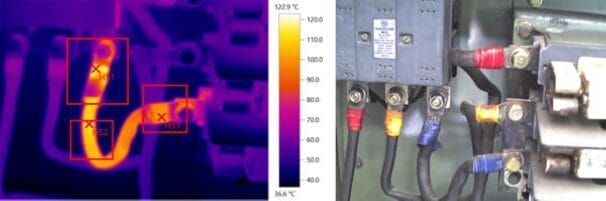
Examples of thermography findings
Thermal and visual comparison showing localized overheating in electrical panel connections

Instruments used
Infrared thermal imaging camera used for inspection
Inspection is conducted under load conditions using NABL-calibrated infrared thermal imaging cameras (FLIR/Testo/Fluke). Thermal scanning is performed across panels, joints, and terminations, and temperature variation is analysed based on phase comparison and ambient reference.
All instruments used are calibrated and suitable for industrial thermographic inspection, ensuring accuracy and repeatability of measurements.

What you receive in the report
Sample thermography report with hotspot analysis and temperature data
- Thermal and visual images
- Temperature analysis based on phase-to-phase comparison, ambient reference, and abnormal temperature differential (ΔT)
- Severity classification
- Severity classification based on temperature differential and risk of failure (Minor, Major, Critical)

Where this service is used
Thermography inspection across industrial and commercial facilities
- industrial plants
- warehouses
- commercial buildings
Earthing is often verified along with Earthing Testing.
How Electrical Thermography Inspection is Conducted
Electrical thermography inspection is conducted on energized equipment under normal operating load conditions to ensure accurate detection of thermal anomalies.
Infrared scanning is carried out across electrical panels, busbars, cable terminations, breakers, and transformer connections. The inspection captures temperature variation across phases, joints, and components.
Thermal images are analysed by comparing temperature differences (ΔT) between similar components, phases, and against ambient conditions. Abnormal temperature rise indicates issues such as loose connections, overloading, imbalance, or contact resistance.
Critical hotspots are identified and prioritised based on severity and risk of failure.
Standards & Guidelines Followed
Electrical thermography inspection is conducted in line with internationally accepted condition monitoring and maintenance practices, including:
- NFPA 70B – Recommended practice for electrical equipment maintenance
- ISO 18434 – Condition monitoring and diagnostics using thermography
These standards define inspection methodology, interpretation of thermal patterns, and maintenance decision criteria.
Technical reference
Refer to our detailed guide on thermography testing for electrical panels.
Why Elion
- independent engineering audit firm
- pan-India presence
- calibrated instruments
- integrated with Arc Flash Study
- supports Lightning Protection Testing
Resources
Related Links
FAQs
1. What is an Electrical Thermography Audit?
An Electrical Thermography Audit is a non- invasive inspection process that uses thermal imaging technology to detect potential faults, hotspots, and anomalies in electrical systems. response procedures.
2. Why is Electrical Thermography important?
Electrical Thermography helps identify hidden issues that could lead to safety hazards, system failures, and inefficiencies, allowing for timely maintenance and prevention.
3. How does Thermography work?
Thermography captures temperature variations in electrical components, highlighting areas of concern that may indicate overloading, loose connections, or other issues.
4. Who performs the audits?
Our audits are conducted by certified and experienced thermography professionals who specialize in electrical system assessments.
5. Is Thermography a replacement for regular maintenance?
No, Thermography complements regular maintenance by identifying potential issues early. Its an additional tool to enhance safety and efficiency.
6. What industries do you serve?
We serve a wide range of industries, including manufacturing, commercial, industrial, and institutional sectors.
7. How often should I get an Electrical Thermography Audit?
Frequency depends on your systems complexity and usage. Annual audits are common, but more frequent assessments may be necessary for critical systems. response plans.
8. Can Thermography prevent electrical fires?
Yes, by detecting overheating components, Thermography helps prevent conditions that can lead to electrical fires.
9. Can Thermography improve energy efficiency?
Absolutely, by identifying inefficiencies and areas of excess heat, you can optimize energy consumption and reduce operational costs.
10. What is the cost of an Electrical Thermography Audit?
Cost varies based on factors such as system size and complexity. Request a free quote to get an accurate estimate.
11. Are your auditors certified?
Indeed, our auditors are certified professionals with extensive training in thermography and electrical systems.
12. How long does an audit take?
Audit duration depends on the size and complexity of the system. For instance, small setups may take a few hours, while larger facilities could require more time.
13. What do I receive after the audit?
You’ll receive a detailed report that includes thermal images, findings, and recommendations for addressing any identified issues.
14. How can Thermography help with predictive maintenance?
Thermography provides early warning signs of potential failures. As a result, you can schedule maintenance before costly breakdowns occur.
15. Is Thermography safe for my equipment?
Absolutely, in addition, Thermography is non-contact and non-destructive, ensuring the safety of your equipment during the inspection.
16. Can Thermography detect all types of electrical issues?
While it’s highly effective, Thermography may not detect issues like internal component degradation. Therefore, it’s one tool in a comprehensive maintenance strategy.
17. How accurate is Thermography?
Modern thermal imaging technology is highly accurate, however, interpretation of results by skilled auditors is crucial for reliable assessments.
18. What if issues are found during the audit?
Our report will outline recommended actions. Subsequently, you can work with us to plan and implement appropriate solutions.
19. Can I see the thermal images myself?
Yes, in addition, we provide thermal images in the audit report for your reference and understanding.
20. How do I schedule an audit?
Scheduling is easy. All you need to do is simply reach out to us via phone, email, or our website, and we’ll coordinate the best time for your Electrical Thermography Audit.
21. What is the purpose of thermography?
Thermography is a technique used to create images or maps based on the infrared radiation emitted by objects. Furthermore, it is primarily used for detecting and visualizing temperature variations in objects, surfaces, or environments. The main purpose of thermography is to:
Temperature Measurement and Analysis: Thermography helps measure and analyze temperature distributions across a surface or object. Additionally, this can be valuable in various industries such as manufacturing, construction, and electronics, where monitoring temperature changes is crucial for quality control, process optimization, and safety.
Equipment Maintenance and Condition Monitoring: Thermography is widely used for predictive maintenance of equipment and machinery. In this capacity, by identifying abnormal temperature patterns, technicians can detect potential faults, overheating, or worn components, thereby allowing for timely maintenance to prevent costly breakdowns.
Building Inspections: In construction and architecture, thermography is employed to assess the energy efficiency of buildings and to identify areas of heat loss or air leakage. Furthermore, it’s also used to detect structural issues, such as water leaks, moisture intrusion, and insulation problems.
Medical Diagnostics: In the field of medicine, thermography can help identify and diagnose certain medical conditions. For instance, it can be used to detect breast cancer or assess inflammation in various parts of the body, since abnormal temperature patterns can indicate underlying health issues.
Firefighting and Search and Rescue: Thermography aids firefighters in locating hotspots within burning structures. Additionally, it’s also useful in search and rescue operations, where it assists in locating people in difficult conditions or identifying warm objects or bodies in low-visibility situations.
Electrical Inspections: Thermography is used to inspect electrical systems and components. Moreover, it can identify areas of high resistance, loose connections, or overloaded circuits, all of which can potentially lead to fire hazards or equipment failures.
Research and Development: Thermography is used in scientific research and development to study heat distribution, heat transfer, and thermal behavior of materials and systems. Furthermore, it plays a crucial role in various fields such as materials science, engineering, and physics.
Wildlife Monitoring: In ecology and wildlife biology, thermography is used to study animal behavior and distribution by detecting their body heat signatures. Specifically, it’s particularly helpful in nocturnal studies and observing animals in their natural habitats.
22. What is thermography in electrical maintenance?
Thermography plays a crucial role in electrical maintenance because it enables the detection of potential issues in electrical systems through the visualization of temperature variations. Electrical equipment, when functioning properly, generates heat due to the flow of current. However, abnormal heat patterns can indicate problems such as loose connections, overloaded circuits, imbalanced loads, and other issues that could lead to equipment failure, fires, or safety hazards. In the realm of thermography in electrical maintenance, several key aspects are involved:
Early Problem Detection: Thermography allows technicians to identify overheating components. Furthermore, it enables them to do so even before they reach critical levels. This early detection helps prevent costly breakdowns, equipment damage, and potential safety hazards.
Preventive Maintenance: By conducting regular thermographic inspections, maintenance personnel can schedule timely repairs or replacements for components showing abnormal heat patterns. As a result, this approach helps extend the lifespan of electrical equipment and minimizes downtime.
Risk Assessment: Thermography provides a visual representation of the heat distribution in electrical systems. Consequently, this allows technicians to assess potential risks and prioritize maintenance tasks based on the severity of temperature anomalies.
Loose Connection Detection: Loose or corroded electrical connections can lead to resistance, resulting in the generation of heat. Thermography can identify these hotspots, thereby enabling technicians to address the issue before it escalates.
Load Balancing: Imbalanced loads can cause certain components to overheat. To address this, by using thermography, technicians can identify areas with uneven heat distribution and take corrective measures to balance the loads.
Electrical Panel Inspection: Thermography is used to inspect electrical panels and distribution boards. Specifically, hotspots within these panels could indicate issues with circuit breakers, fuses, or other components.
Switchgear Inspection: Switchgear, which controls the flow of electricity in a system, can generate a significant amount of heat. Therefore, thermography helps ensure that switchgear is operating within safe temperature limits.
Motor and Transformer Monitoring: Overheating in motors and transformers can lead to failure. To prevent this, thermography can identify abnormal temperature patterns in these devices, thus allowing for timely maintenance.
Fire Prevention: Many electrical fires are caused by heat buildup due to electrical faults. Therefore, thermography aids in identifying potential fire hazards, which in turn allows for early intervention.
Documentation and Record Keeping: Thermographic inspections provide visual evidence of the condition of electrical systems over time. Additionally, this documentation is valuable for compliance, audits, and tracking maintenance history.
23. What are the benefits of electrical thermography?
Early Problem Detection: Electrical thermography allows for the early detection of issues such as overheating, loose connections, imbalanced loads, and other anomalies. This early identification helps prevent costly equipment breakdowns, downtime, and potential safety hazards.
Enhanced Safety: By identifying potential fire hazards and safety risks, thermography contributes to a safer working environment for personnel and helps prevent accidents and injuries caused by electrical failures.
Reduced Downtime: Regular thermographic inspections enable maintenance teams to proactively address issues before they lead to equipment failures. This approach reduces unplanned downtime and production interruptions, leading to increased operational efficiency.
Increased Equipment Lifespan: Timely identification and resolution of electrical problems extend the lifespan of electrical components and systems. This reduces the need for frequent replacements and contributes to cost savings.
Cost Savings: Preventive maintenance based on thermographic findings is more cost-effective than reactive repairs. It helps avoid expensive emergency repairs, equipment replacements, and production losses.
Improved Energy Efficiency: Thermography can reveal energy inefficiencies, such as areas of heat loss in buildings or overloading in electrical systems. Addressing these issues leads to energy savings and reduced operational costs.
Compliance and Regulatory Requirements: Many industries have regulations and standards related to electrical safety and maintenance. Thermography helps organizations meet these requirements by ensuring the proper functioning and safety of electrical systems.
Data-Driven Decision Making: Thermographic inspections provide visual data that can be analyzed to make informed decisions about maintenance priorities, repairs, and equipment upgrades.
Documentation and Record Keeping: Thermography generates visual evidence of the condition of electrical systems over time. This documentation is valuable for compliance reporting, audits, and insurance purposes.
Minimal Disruption: Thermographic inspections are non-intrusive and do not require equipment shutdowns. This means that routine inspections can be conducted without disrupting normal operations.
24. Are there any safety precautions during an Electrical Thermography Audit?
Yes, safety precautions are essential, including de-energizing equipment before inspection.
25. Who should consider an Electrical Thermography Audit and Inspection?
Any business with electrical systems can benefit, especially industries where downtime is costly or poses safety risks.
26. How often should Electrical Thermography Audits be conducted?
Frequency varies but typically annually, with more frequent checks for critical systems.
27. What are the primary benefits of Electrical Thermography Inspections?
Benefits include early fault detection, reduced energy consumption, and enhanced safety.
28. What are common electrical issues that Thermography can detect?
Thermography can detect loose connections, overloaded circuits, and faulty components.
Outbound Link: Detectable Electrical Issues
29. How can businesses prepare for an Electrical Thermography Audit?
Businesses should ensure clear access to electrical systems and provide necessary documentation.
Outbound Link: Preparing for a Thermography Audit
30. What happens during an Electrical Thermography Audit and Inspection?
Infrared cameras capture thermal images of electrical components, which are analyzed for anomalies.
31. Can businesses use the data from Thermography Inspections for predictive maintenance?
Yes, data can be used to predict equipment failures and plan maintenance proactively.
Outbound Link: Predictive Maintenance with Thermography
32. Do electrical systems need to be under load during thermography inspection?
Yes. Electrical thermography is most effective when systems are operating under normal or peak load. Load allows abnormal heat patterns—caused by loose connections, imbalance, or overload—to appear clearly in thermal images.
33. Can thermography inspections be performed on live electrical equipment?
Yes. One of the biggest advantages of thermography is that it is a non-contact and non-intrusive technique, allowing inspections on live electrical panels without switching off power.
34. What types of faults cannot be detected by thermography?
Thermography detects heat-related issues only. Problems that do not generate abnormal heat—such as insulation breakdown without load or internal wiring defects with no temperature rise—may require complementary testing methods.
35. Is electrical thermography suitable for old or aging electrical installations?
Absolutely. Aging systems are more prone to loose connections, corrosion, and overloaded components. Thermography is especially useful in identifying early-stage failures in older electrical infrastructure.
36. How are thermography findings prioritized in the report?
Findings are usually categorized based on severity—critical, high, medium, or low risk—helping your maintenance team address urgent issues first and plan corrective actions systematically.
37. Can electrical thermography help reduce maintenance costs?
Yes. By identifying problems early, thermography helps avoid costly breakdowns, emergency repairs, and unplanned downtime, making maintenance more predictive and cost-effective.
38. Does thermography inspection require access to internal electrical components?
Only accessible and safe-to-open panels are inspected. Wherever access is restricted, inspections are performed following safety procedures and site rules to avoid risk to personnel or equipment.
39. How soon should corrective actions be taken after issues are identified?
Critical findings should be addressed immediately, while medium and low-risk issues can be planned into routine maintenance schedules. The audit report clearly indicates recommended timelines.
40. Can thermography be used as part of an annual electrical safety program?
Yes. Many organizations integrate thermography into their annual or bi-annual electrical safety and preventive maintenance programs to continuously monitor system health.
41. Can thermography be done without shutdown?
Yes, it is performed on live equipment under safe conditions.
42. What defects can be detected?
Loose connections, overloads, imbalance, and overheating components.
43. Need electrical panel thermography inspection?
Onsite electrical thermography inspection
Contact Elion for professional thermography inspection services.